it’s so weird not being friends with people that used to be really important to u like u never stop being reminded of them bc their personalities and sense of humor and so many little details about them will always be in ur brain like u could see something in a store and think “they would like that” or watch a video and think “they would think this is funny” or even just the most random shit will make u think of them and it’s such a weird feeling
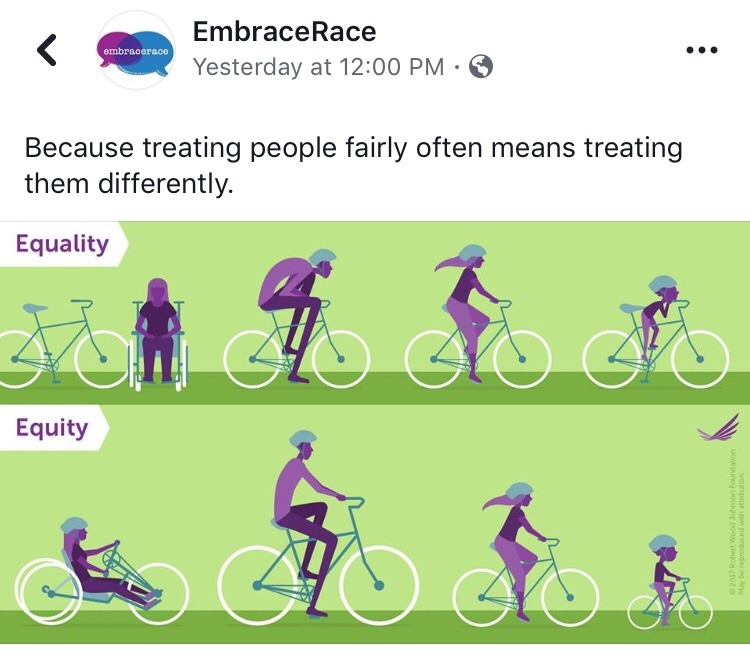
Because treating people fairly often means treating them differently.
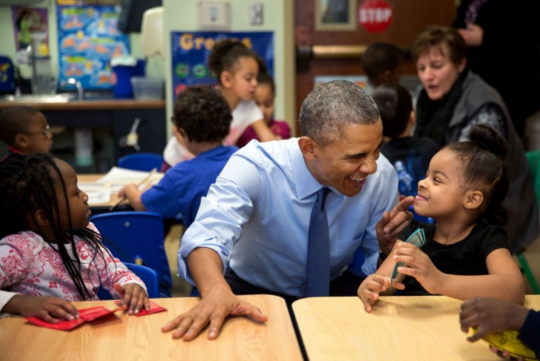
This is something that I teach my students during the first week of school and they understand it. Eight year olds can understand this and all it costs is a box of band-aids.
I have each students pretend they got hurt and need a band-aid. Children love band-aids. I ask the first one where they are hurt. If he says his finger, I put the band-aid on his finger. Then I ask the second one where they are hurt. No matter what that child says, I put the band-aid on their finger exactly like the first child. I keep doing that through the whole class. No matter where they say their pretend injury is, I do the same thing I did with the first one.
After they all have band-aids in the same spot, I ask if that actually helped any of them other than the first child. I say, “Well, I helped all of you the same! You all have one band-aid!” And they’ll try to get me to understand that they were hurt somewhere else. I act like I’m just now understanding it. Then I explain, “There might be moments this year where some of you get different things because you need them differently, just like you needed a band-aid in a different spot.”
If at any time any of my students ask why one student has a different assignment, or gets taken out of the class for a subject, or gets another teacher to come in and help them throughout the year, I remind my students of the band-aids they got at the start of the school year and they stop complaining. That’s why eight year olds can understand equity.


















































































 LemonGrenade